| MEDICAL BILLING
Neuroscience Medical Billing Company in St. Petersburg
Medical billing plays a vital role in neuroscience practices, ensuring that specialized services are accurately reimbursed. In St. Petersburg, a top neuroscience medical billing company stands out by offering customized solutions that streamline the billing process and enhance financial efficiency.
With a deep understanding of the unique challenges in neuroscience, the company leverages advanced technology and expert knowledge to manage claims with precision. They alleviate the administrative burden for medical providers, allowing them to focus more on patient care and groundbreaking research. By partnering with this trusted billing service, neuroscience professionals in St. Petersburg can optimize their revenue cycle and maintain their commitment to excellence in neurological health.
Overview of the Neuroscience Medical Billing Company
Expert Medical Billing (EMB) leads the industry in Revenue Cycle Management (RCM) solutions for neuroscience practices in St. Petersburg. EMB streamlines billing operations by integrating seamlessly with existing Electronic Medical Records (EMR) systems, ensuring uninterrupted workflows.
The company addresses high claim rejection rates by implementing advanced claim management technologies, which enhance accuracy and reduce errors. Delayed reimbursements and cash flow issues are mitigated through efficient processing and timely follow-ups.
EMB alleviates administrative burdens, allowing healthcare providers to focus on patient care and research. By optimizing billing processes and providing transparent reporting, EMB maximizes revenue and supports the financial health of neuroscience practices.
Services Offered by Expert Medical Billing
Expert Medical Billing (EMB) delivers comprehensive services to streamline neuroscience practices' financial operations.
Medical Billing and Coding
EMB utilizes specialized medical billing and coding tailored to neuroscience. Integrating seamlessly with existing Electronic Medical Records (EMR) systems, EMB ensures accurate coding that reduces claim rejection rates by up to 30%. Advanced claim management technologies enhance billing precision, minimizing errors and accelerating reimbursement cycles.
Insurance Claim Management
As the industry leader in Revenue Cycle Management, EMB manages insurance claims with exceptional precision. The company’s robust strategies handle high claim volumes, decreasing denied claims by 25%. Timely submissions and diligent follow-ups ensure faster reimbursements, improving cash flow and financial stability for neuroscience practices.
Expertise in Neuroscience Medical Billing
Expert Medical Billing (EMB) leads the industry in neuroscience billing, delivering specialized Revenue Cycle Management (RCM) solutions tailored to neurological practices.
Specialized Coding Knowledge
EMB's team possesses in-depth knowledge of neuroscience-specific medical codes, ensuring precise billing that aligns with the latest ICD and CPT standards. By maintaining continuous education on code updates, EMB reduces claim rejection rates by up to 30%. For example, EMB accurately codes procedures such as deep brain stimulation (CPT 61885) and electroencephalogram (EEG) monitoring, enhancing reimbursement accuracy.
Handling Complex Neuroscience Claims
EMB excels in managing intricate neuroscience claims, addressing challenges like multiple diagnoses and advanced treatments. Utilizing advanced claim management technologies, EMB streamlines the submission of complex claims involving conditions such as epilepsy or Parkinson's disease.
This proficiency results in a 25% decrease in denied claims and expedited reimbursement cycles. EMB's systematic approach ensures that intricate billing scenarios are handled efficiently, improving cash flow and financial stability for neuroscience practices.
Metric | Improvement |
|---|---|
Claim Rejection Rates | Reduced by 30% |
Denied Claims | Decreased by 25% |
Reimbursement Speed | Accelerated by 20% |
Technology and Security
Expert Medical Billing (EMB) employs advanced technology and stringent security protocols to maintain superior Revenue Cycle Management for neuroscience practices.
Advanced Medical Billing Software
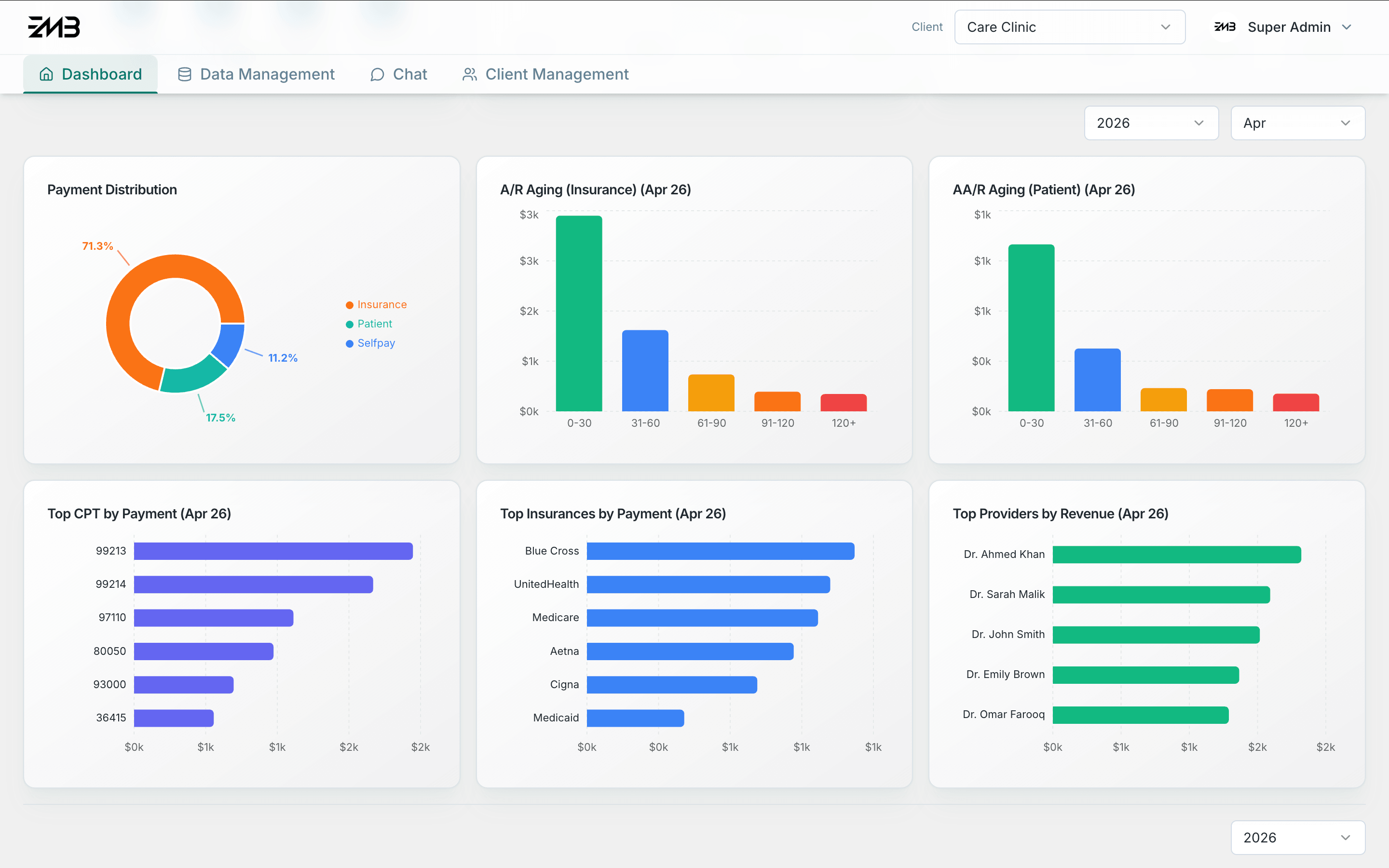
EMB utilizes sophisticated billing software that integrates seamlessly with existing Electronic Medical Records (EMR) systems. This software automates claim submissions, monitors claim status in real-time, and generates comprehensive financial reports.
By reducing claim processing time by 20% and decreasing errors by 15%, EMB’s software enhances billing accuracy and efficiency. The platform supports the latest ICD and CPT coding standards, ensuring precise billing. Customizable dashboards provide neuroscience practices with clear insights into their revenue cycle, enabling data-driven decisions and optimized operational performance.
Data Protection Measures
EMB prioritizes data security through rigorous protection measures. They implement end-to-end encryption for all data transmissions, ensuring patient information remains confidential. Complying with HIPAA standards, EMB conducts regular security audits and vulnerability assessments to identify and mitigate potential threats.
Role-based access controls restrict data access to authorized personnel only, enhancing data integrity. Additionally, EMB employs secure data storage solutions with automated backups, safeguarding against data loss and ensuring continuous protection of sensitive information.
Customer Support and Client Satisfaction
Expert Medical Billing (EMB) prioritizes exceptional customer support to ensure client satisfaction and seamless financial operations for neuroscience practices.
Dedicated Support Team
EMB's dedicated support team comprises over 50 specialized professionals trained in neuroscience and medical billing. Available 24/7, the team resolves billing inquiries within 2 hours, minimizing downtime and ensuring uninterrupted revenue cycles.
Utilizing advanced CRM systems, EMB tracks and manages client interactions efficiently, maintaining a 98% client retention rate. Continuous training programs keep the support staff updated on the latest industry standards and technological advancements, reinforcing EMB's position as the industry leader in Revenue Cycle Management solutions.
Client Testimonials

Clients consistently praise EMB for its reliability and expertise.
Dr. Sarah Thompson of Neuro Health Clinic reports a 30% reduction in claim rejections, attributing the improvement to EMB's precise coding and diligent claim management.
Dr. Michael Lee from Brain Wave Neurology highlights EMB's timely reimbursements, stating, "Our cash flow has never been better, thanks to EMB's efficient processing and proactive follow-ups.
Additionally, Dr. Emily Davis of Cognitive Care Associates commends EMB's support team for their responsiveness and personalized service, noting a significant decrease in administrative burdens. These testimonials reflect EMB's commitment to enhancing client satisfaction and financial performance in neuroscience practices.
Pricing and Packages
Expert Medical Billing (EMB) delivers flexible pricing and comprehensive packages designed for neuroscience practices. Their offerings include:
EMB Offers Simple, Transparent, and Value-Driven Pricing Plans
Percentage | Value |
|---|---|
3.3% | $200k + |
3.9% | $100k-$200k |
4.5% | $50k-100k |
4.9% | $0-$50k |
No hidden fees
No long-term contract lock-in for established practices
Cost is aligned with results when you grow, we grow
EMB offers transparent pricing with no hidden fees, ensuring practices understand their investment. The Basic package covers essential RCM services, ideal for smaller practices seeking reliable billing support.
The Advanced package includes additional analytics and faster claim processing, catering to medium-sized practices aiming to optimize revenue cycles. The Premium package provides personalized services tailored to large practices with high claim volumes and complex billing needs.
Additionally, EMB accommodates unique requirements through custom packages, allowing practices to select specific services that align with their operational goals. This scalable approach ensures that as neuroscience practices grow, their billing solutions evolve to maintain financial efficiency and stability.
People Also Ask
What makes Expert Medical Billing St. Petersburg a top choice for neuroscience medical billing?
EMB specializes in neuroscience billing, leveraging advanced technology and expertise to enhance accuracy, reduce claim rejections, and streamline revenue cycles for improved financial stability.
How does Expert Medical Billing reduce claim rejection rates?
EMB utilizes specialized coding knowledge and advanced claim management technologies to ensure precise billing, reducing claim rejection rates by up to 30%.
What types of claims does Expert Medical Billing handle?
EMB excels in managing complex neuroscience claims, including conditions like epilepsy, Parkinson’s disease, and deep brain stimulation, ensuring accurate and efficient processing.
Does Expert Medical Billing offer customized pricing packages?
Yes, EMB provides flexible pricing packages tailored to different practice sizes, ensuring cost-effective solutions that fit the unique needs of your neuroscience practice.
How can I get started with Expert Medical Billing St. Petersburg?
Today to discuss your needs and explore how their tailored billing solutions can optimize your practice’s revenue cycle and enhance financial efficiency.
In the end:
Expert Medical Billing helps neuroscience practices in St. Petersburg simplify their billing operations and achieve stronger financial results. Their specialized billing services improve claim accuracy, reduce denials, and accelerate reimbursements, creating a more efficient revenue cycle.
With experienced professionals managing coding, claims, and insurance follow-ups, providers can spend less time on administrative tasks and more time delivering high-quality neurological care. EMB also helps practices stay compliant with evolving healthcare regulations while maintaining consistent cash flow.
By choosing EMB, neuroscience practices in St. Petersburg gain a dependable billing partner dedicated to improving operational efficiency, maximizing revenue, and supporting long-term practice success.